501 Darts Rules - How to Play
For most players, a game of darts means a game of 501. It’s the most popular darts game, and it’s what the pros play at every major tournament. Each player starts with 501 points and races to reach exactly zero, finishing on a double.
The basics
One game from 501 down to zero is called a leg.
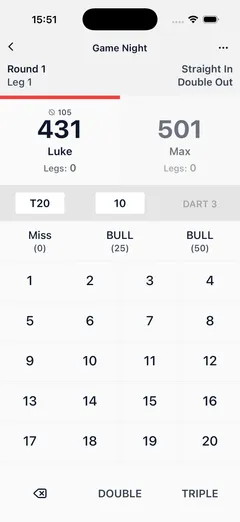
Throw 3 darts, add them up, subtract the total. Every dart counts from your first turn, so you don’t need a double to start. Start a turn on 501, score 80, and you are left with 421. Your opponent works down their own score from 501, and you take turns until somebody wins.
Scoring
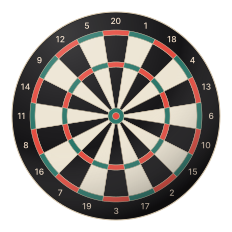
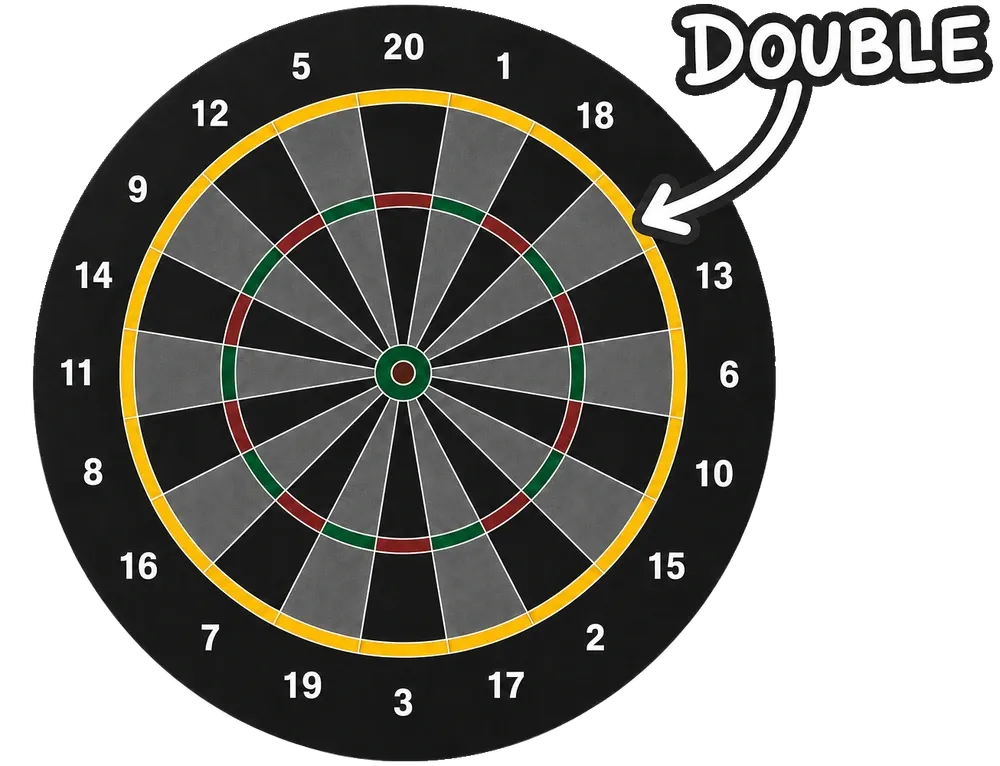
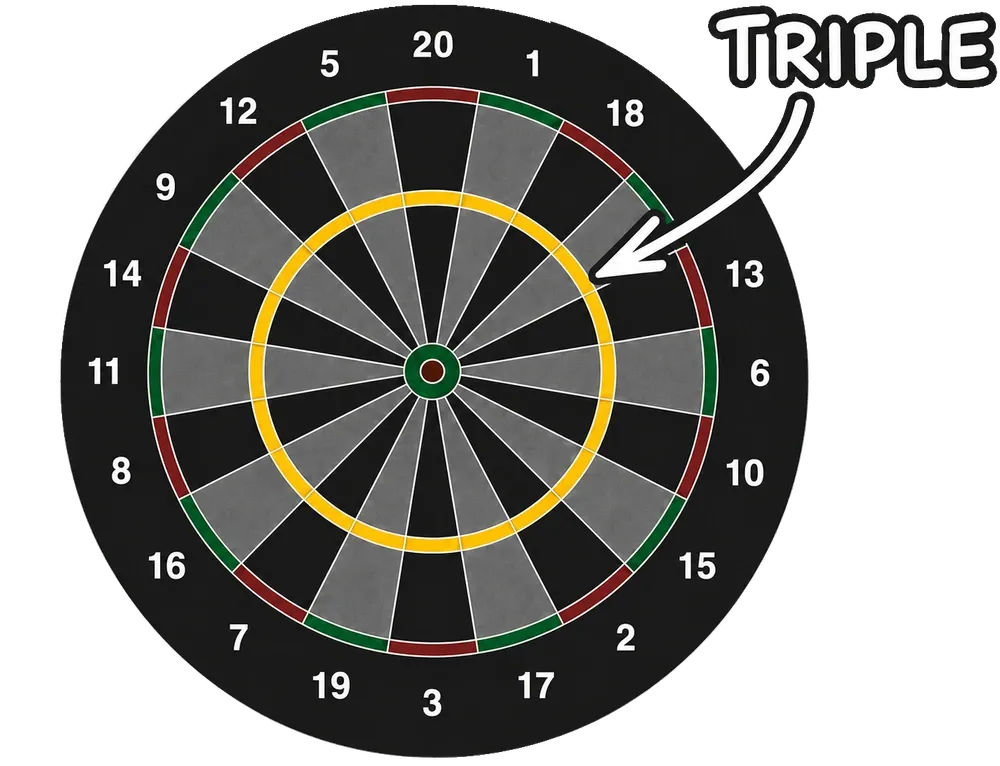
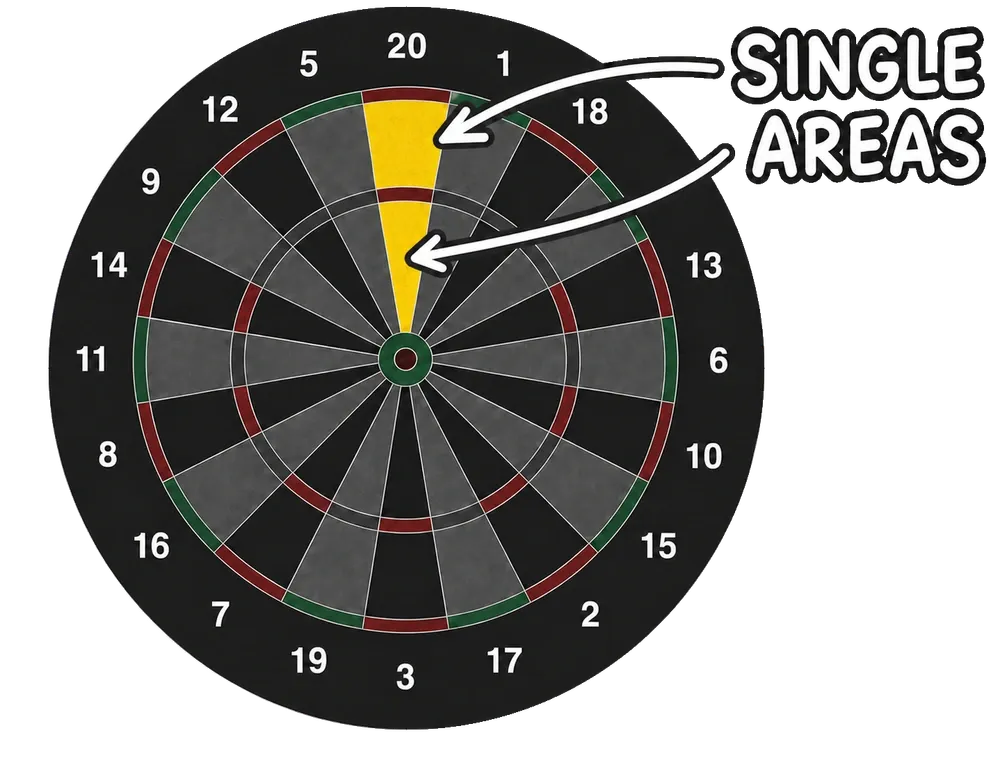
The dartboard has 20 numbered sections. The large areas score the number shown. Hit the narrow outer ring for double points or the narrow inner ring for triple points.
For example, scores 20, scores 40, and scores 60. A triple is also called a treble.
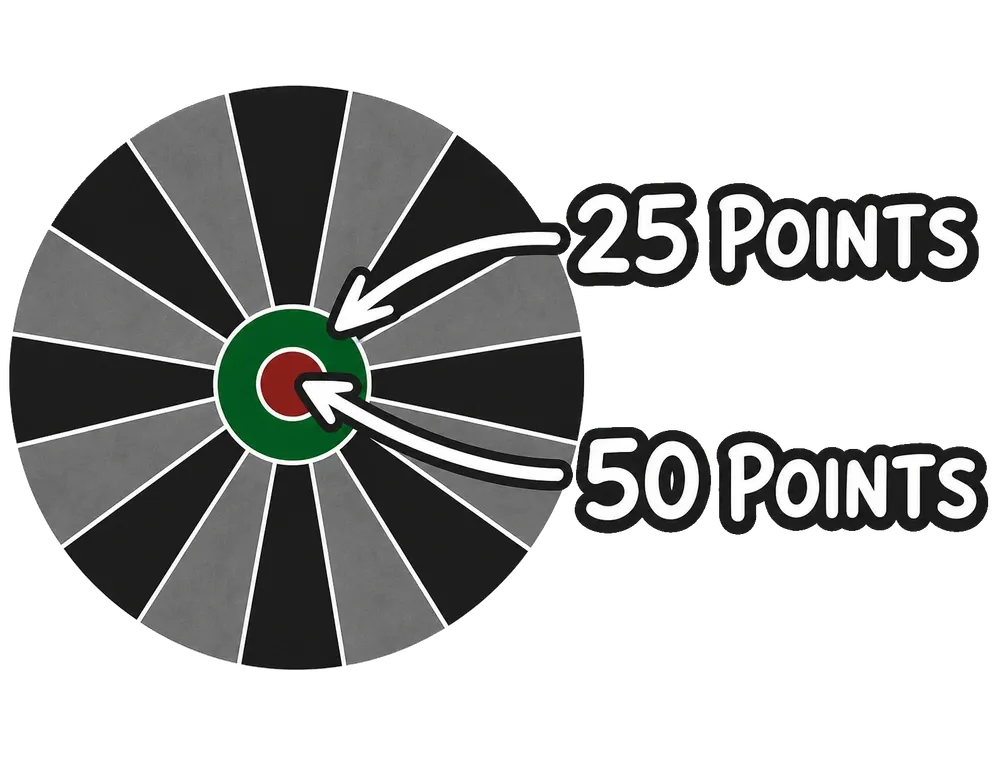
The small circle in the centre, the bullseye, scores 50. The ring around it, the outer bull, scores 25.
Hitting with all 3 darts scores 180, the highest possible total in one turn.
How to win
Be the first player to reach exactly zero. Finishing on a double is the standard rule, which means your final dart must hit the narrow outer ring of the board. The bullseye also counts as a double and can win the game if you have 50 points left.
For example:
- With 40 points left, hit to win.
- With 32 points left, hit to win.
- With 50 points left, hit to win.
If you have an odd number left, you need to make it even before you can finish on a double. With 41 left, for example, hit to leave 40, then to win.
See your finishing options with the checkout calculator.
Busts

A turn is a bust if you score more than you have left or reach zero without a double.
Your score goes back to where it was when the turn started, none of that turn’s points count, and it’s your opponent’s turn. On 32, a leaves 12 and you carry on. A busts you and puts you straight back on 32.
Leaving exactly 1 is also a bust, because no double is worth 1.
Legs, sets and matches
Most matches are a race, so best of 5 legs goes to the first player to win 3. Longer matches group legs into sets, where you take enough legs to win a set and enough sets to win the match.
Most professional events are a race to a set number of legs. Some major championships are played in sets.
Board height and throwing distance
For a standard steel-tip setup, hang the board with the bullseye 173 cm / 5 ft 8 in above the floor, and mark the 237 cm / 7 ft 9¼ in from the front of the board. The dartboard setup and throwing distance guide has diagrams and soft-tip measurements.
Other ways to play
If you’re new to darts, you can make 501 easier by playing straight-out. You still need to reach exactly zero, but any scoring dart can win the game, so you don’t have to hit a double.
For a quicker game, play 301, the short version that suits a busy pub board. Both games are part of the X01 family. The X01 guide covers other starting scores and the different ways to start and finish a game.
Stats tracked in DartsOn
At the end of each leg, DartsOn shows these stats for each player:
| Stat | What it shows |
|---|---|
| 3-Dart Avg (Average) | Your average points per 3 darts in the leg. A busted turn scores 0 and counts as 3 darts. |
| First 9 Avg | Your 3-dart avg over the first 9 darts of the leg. |
| Darts Thrown | Darts thrown in the leg. |
| Checkout % | Turns that started on 170 or less, or 180 or less with straight-out or master-out, and how many of them ended the leg, for example 33% (1/3). |
| High Score | Your highest turn in the leg. |
| Total Turns | Turns taken in the leg. |
| 0, 1-59, 60-99, 100-139, 140-179, and 180 Turns | How many of your turns scored in each range. |
| Heat map | Where each player's darts landed. Tap it for a full-screen view of every landing. Shown when darts are scored with the camera or entered by tapping the board. |
At the end of the game, you also see these stats across every leg, with your Best High Score, the legs and sets each player won, and your 3-dart avg in each leg.