
No Score Cricket Rules - How to Play
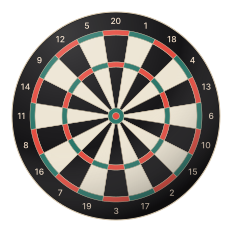
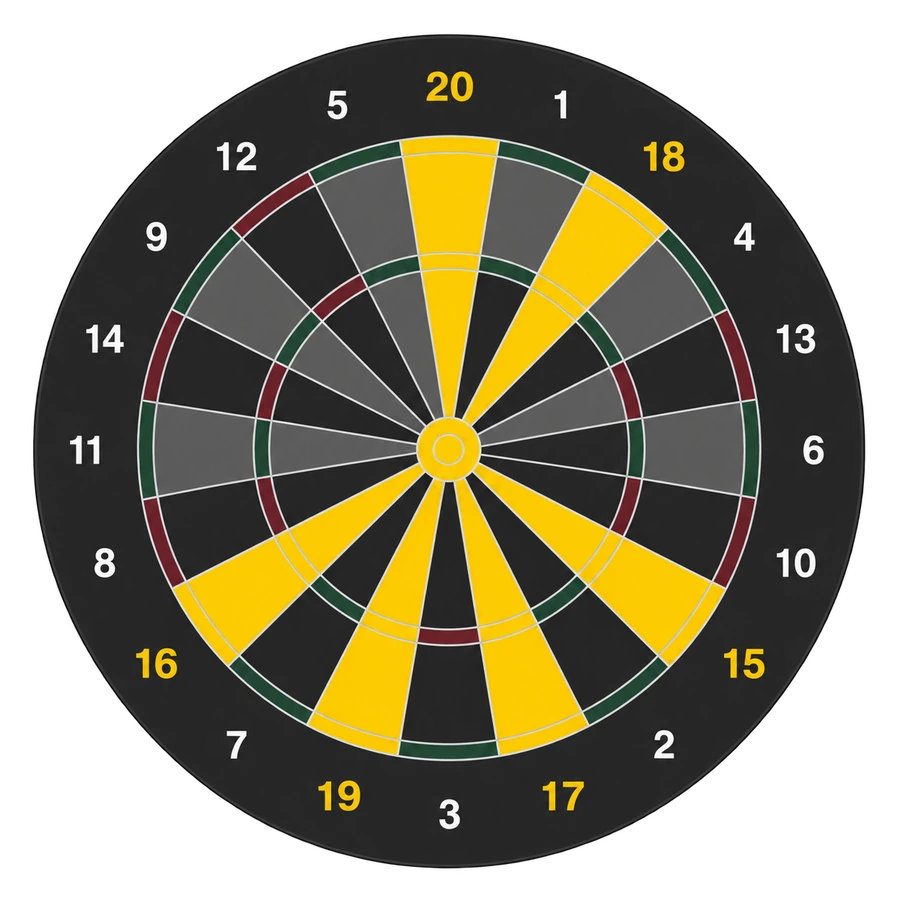
No Score Cricket is Cricket with the points taken out. Players race to put 3 marks on 20, 19, 18, 17, 16, 15, and the bull, and the first to close all 7 wins. Games end as soon as one player closes all 7, with no points to track, which makes it a good first Cricket game.
How it differs from Standard Cricket
No Score uses the same targets and marks as Standard Cricket. Only the scoring is gone:
| Standard Cricket | No Score Cricket | |
|---|---|---|
| Extra hits on a target you have closed | Score points while an opponent still needs that target | Do nothing |
| Your opponent’s marks | Decide where you can still score | Never affect you |
| To win | Close every target with at least as many points as each opponent | Be the first to close every target |
You don’t need to know Standard Cricket first. The rest of this page covers the whole game.
How a game works
Each turn is 3 darts, and players alternate until someone has closed every target. The order is up to you. Work down from 20, start on the bull, or change targets between darts.
Only 7 targets count. A dart in 1 to 14, or off the board, earns nothing.
Marks
Every target needs 3 marks. The part of the target a dart lands in sets how many it earns.
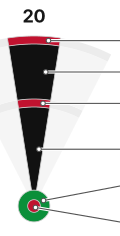
- Double: 2 marks
- Single: 1 mark
- Triple: 3 marks
- Single: 1 mark
- Outer bull: 1 mark
- Bullseye: 2 marks
A triple earns all 3 marks at once, so one good dart can close a number. The bull always takes at least 2 darts, since even the bullseye earns only 2 marks. Marks stay with you from turn to turn.
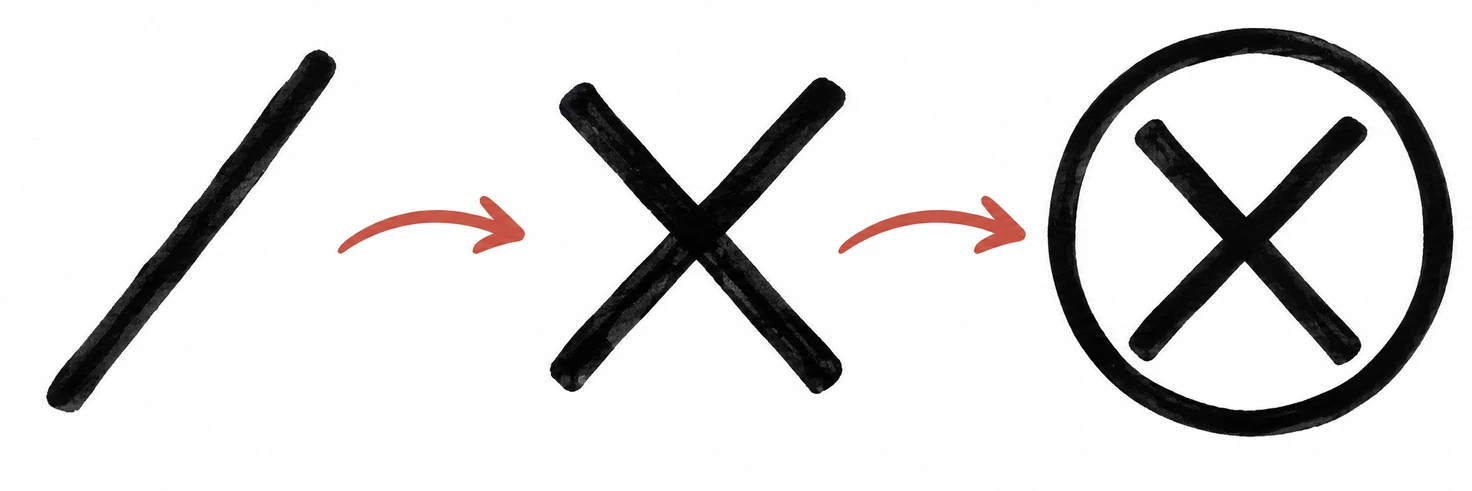
On paper, draw a stroke for each of the first 2 marks, then circle them for the third.
Closing a target
Once you have 3 marks on a target, you are done with it. More darts there earn nothing, so move on to a target you still need. Marks past the third are lost too.
Nobody can block you. It doesn’t matter who closes a target first, because every player needs their own 3 marks on it.
Read a No Score scoreboard
The targets run down the left, with a column of marks for each player and no points column.
Here you and Sam are midway through a game.
| You | Sam | |
|---|---|---|
| 20 |  | |
| 19 | |  |
| 18 |  | |
| 17 | | |
| 16 | | |
| 15 | | |
| Bull | |
- 20
Done for both of you. Neither of you needs 20 anymore, so any dart there is wasted.
- 18
Sam closed 18 first. That doesn't block you. You still need 1 more mark to close it yourself.
- Bull
Both of you still need the bull. Your 1 mark means a bullseye would close it. Sam needs at least 2 more darts there.
Count the marks each player still needs to see who is ahead. You need 6 more, and Sam needs 9.
What one dart can change
Both examples start from the scoreboard above.
- 18You hit
 18
Closed, with 2 marks to spare. You only needed 1. The other 2 are lost, because nothing scores.
- 20Sam hits 20
Nothing happens. Sam has already closed 20, so the whole dart is wasted.
How to win
Close all 7 targets before anyone else. The game ends on the dart that closes your last one, even if you still have darts left in your hand. With no scores to compare, there is no tiebreak.
Say the bull is the last target you need, and you have 2 marks on it.
- BullYou hit the outer bullBull
You win. Your third mark on the bull ends the game on the spot.
Stats tracked in DartsOn
At the end of each leg, DartsOn shows these stats for each player:
| Stat | What it shows |
|---|---|
| MPR | Marks per round: your marks per 3 darts. A triple gives 3 marks, a double or the bullseye 2. |
| Darts | Darts thrown in the leg. |
| Hits | Darts that added marks to a target you had not closed. |
| Heat map | Where each player's darts landed. Tap it for a full-screen view of every landing. Shown when darts are scored with the camera. |
At the end of the game, the summary shows each player's Top MPR and legs won.


